


AI Expense Fraud: Can you tell the difference?



For years, expense controls have relied on a fairly simple principle; if an employee can provide a receipt, the amount looks reasonable and the expense falls within policy, there is evidence that the transaction happened. AI is beginning to challenge that assumption.
According to SAP Concur, 60% of CFOs say travel expense fraud is already increasing within their organisation. Meanwhile, 92% believe employees are likely using AI to falsify travel expenses or receipts.
Creating something that looks like a legitimate receipt has also become remarkably accessible; generative AI can now produce convincing examples in seconds. For demonstration purposes, take a look at the image below. Can you spot the difference?
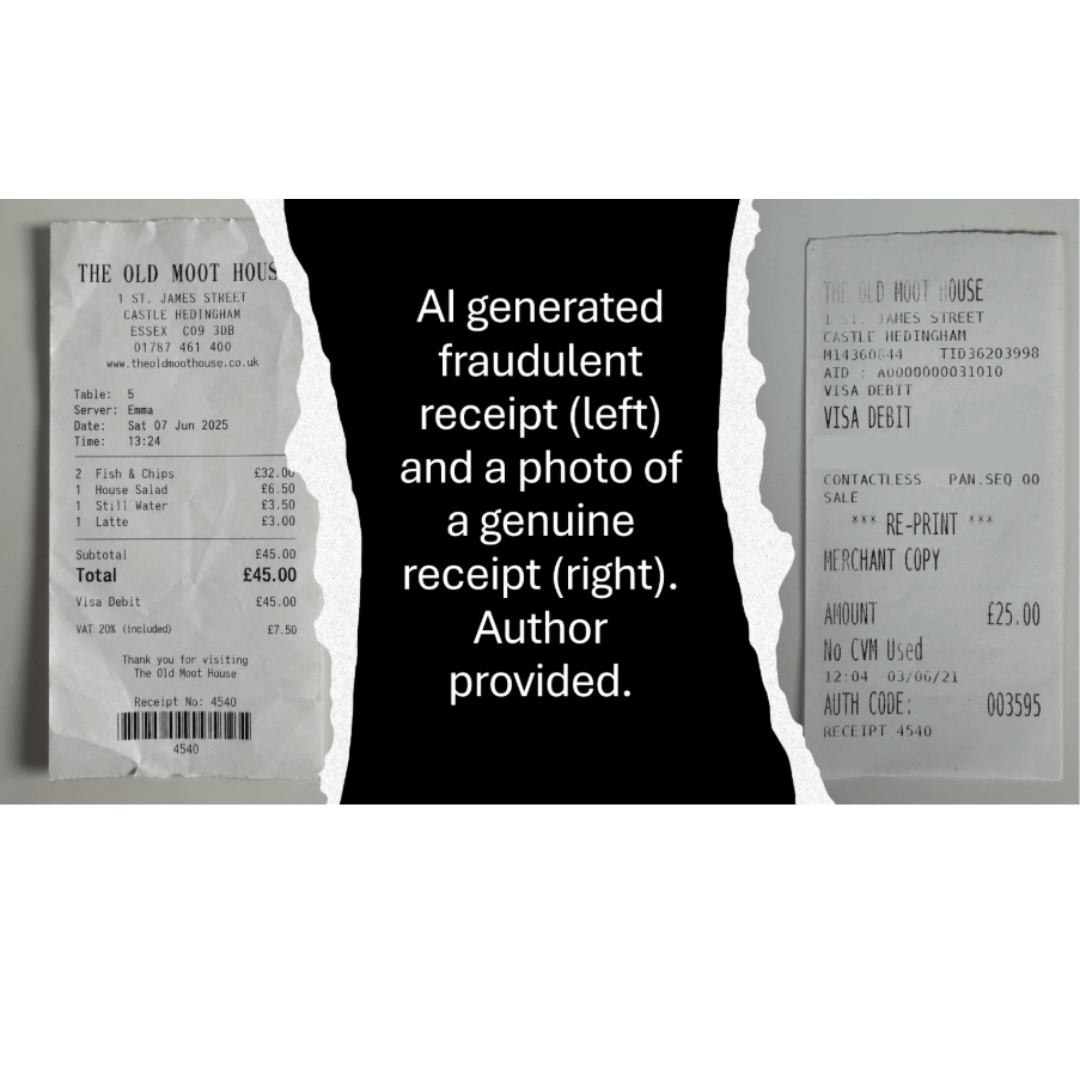
The pace of change is interesting too; AppZen enterprise platform data, reported by Forbes in June 2026, found that AI-generated receipts went from 0% of the fake receipts it identified in March 2025 to 70.8% by mid-May 2026.
At one Fortune 10 company, AppZen identified 340 AI-generated receipts submitted by 142 employees, representing almost $35,000 in attempted claims. Of those employees, 41% submitted more than one AI-generated receipt within a 12-month period.

The Current Expense Landscape
Of course, not every organisation relies on employee-submitted receipts in the same way; for businesses with well-established corporate card or centrally managed expense programmes, much of this risk is already reduced because transactions are captured directly.
But the wider expense landscape is mixed:
- Corporate cards are far from universal; Juniper Research estimates there are around 55 million corporate payment cards globally in 2026, rising to 66 million by 2030. Even then, that equates to only around one corporate payment card for every 6.7 businesses globally, with adoption among smaller businesses remaining comparatively low
- Reimbursed expenses remain commonplace; HMRC research found that 57% of small UK employers (1–49 employees) reimbursed employee expenses, compared with 90% of medium employers and 98% of large employers.
The picture is not one-size-fits-all. Some organisations already have mature systems that reduce their reliance on employee-submitted evidence; elsewhere, reimbursable expenses, supporting receipts and out-of-programme spend remain part of everyday financial administration, and that is where AI introduces an interesting new consideration.
From Expense Evidence to Verified Journeys
We can all see how AI is changing the world in which we work, and how much it has. In this case, it raises an interesting question for Finance, Procurement teams and Travel Managers; when a convincing receipt can be created in seconds, should the focus remain on checking the receipt more closely, or on reducing reliance on employee-submitted evidence in the first place?
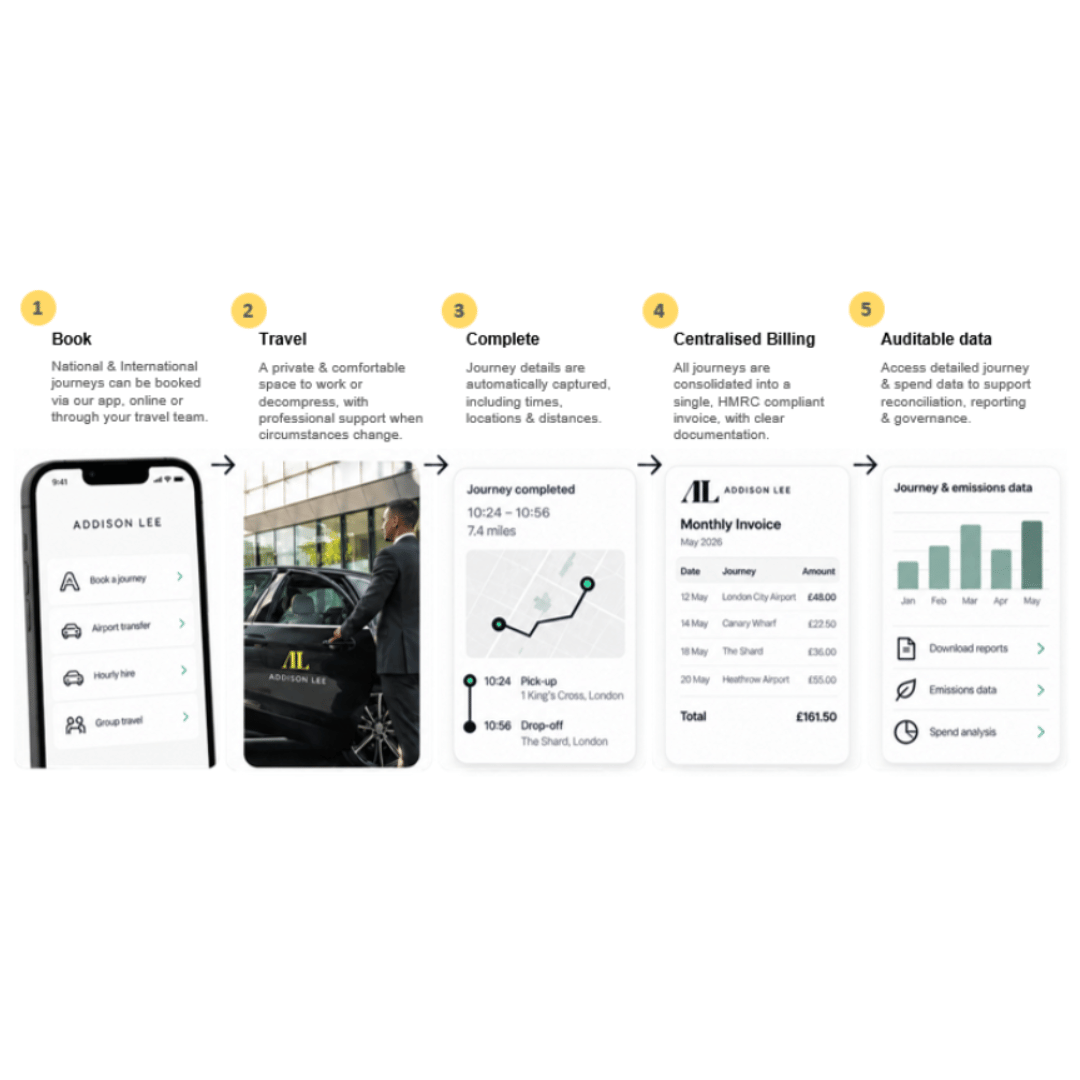
With an Addison Lee corporate account, the journey itself becomes part of the evidence; every booking is recorded from the point it is made through to completion, with centralised, HMRC-compliant billing and auditable journey data. Rather than relying solely on a receipt submitted afterwards, you have an independently recorded journey and transaction to reconcile against.
That same principle can extend beyond London, too. Through Addison Lee’s National & International service, organisations can bring more of their ground transportation into one managed programme; giving Finance and Travel teams greater visibility over journeys and spend wherever their people travel.
Consider an employee returning from an international business trip with ground transport expenses from several different suppliers., where those journeys have been booked independently, Finance may be reliant on the information submitted by the traveller to understand and validate the expense; where they have been booked through a managed programme, the organisation already has a record of the booking, journey and associated spend.
This does not remove the need for good expense controls, nor does it eliminate fraud risk, but it does reduce the reliance on employee-submitted evidence for an area of business travel where the underlying transaction can be independently recorded.
So, rather than simply asking, “does this receipt look real?”, you might increasingly ask, “can we independently verify that this journey happened?”
For ground transportation at least, that may be one practical way organisations can adapt their financial controls as AI changes what we can reasonably accept as evidence.
Disclaimer: The views expressed in this blog are those of the author and cited contributors, and do not necessarily reflect the official views, positions or policies of Addison Lee. Any external contributors (for example, academic experts) are referenced in a personal or professional capacity, and their perspectives should not be interpreted as endorsements by Addison Lee. Addison Lee does not accept responsibility for any statements or opinions expressed in this blog.
Sources
SAP Concur, 8th Annual Global Business Travel Survey Report 2026
SAP Concur, Survey Shows AI Adoption in Business Travel Is Outpacing Governance
SAP Concur, Business Travel in 2026: The CFO Guide
Forbes, James Broughel, “AI-Generated Fake Receipts Are Changing Expense Fraud”, June 2026
Juniper Research: Corporate Cards 2026–2030
HMRC, Research with Employers on Benefits in Kind and Expenses
Related posts
-
 Business|London|
Business Tourism: All You Need to Know
What is business tourism and why does London lead the world? Find out how to plan transport for conferences, corporate events and executive travel with Addison Lee.
-
 Business|
5 Tips on Staying Productive on a Business Trip
Make every business trip more productive with five simple tips, from working in airport lounges to staying connected and making the most of your airport transfer.
-
 Business|Courier|London|
Just How Fast Can a Same-Day Courier Service Deliver a Package?
Find out how fast a same-day courier service can deliver in London, what affects delivery time, and how to book with Addison Lee for urgent packages.
-
 Business|
Beyond London: Your Journey Starts Before You Arrive
Addison Lee is more than London's trusted transport provider. Through our global ground transportation network, we offer reliable, professional journeys in over 90 countries, making business and leisure travel seamless wherever you go.
-
 Business|London|
Airport Transfers: How to Prebook an Airport Pickup
Here's how prebooking works, what to look for, and why it makes a real difference for both personal and corporate travel.
-
 Business|
Sector Spotlight: Media & Productions
The new SAG-AFTRA agreement provides greater certainty for film and TV productions, supporting industry recovery and future growth.